Who Are You Meant to Be?
A Groundbreaking Step-by-Step Process for Discovering and Achieving Your True Potential
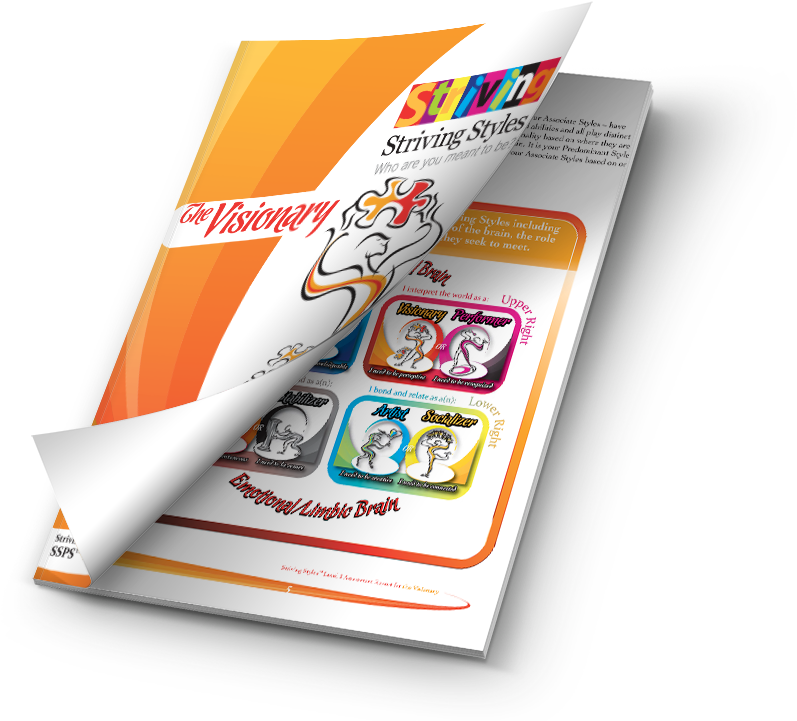
Already purchased an audio copy of “Who Are You Meant to Be?” Scroll below to check out some of the key graphics in the paper copy of our book, and get a sneak peek at the avatar that represents your Striving Style® to learn more about your personality style. Get the most out of your audiobook – click below to access our Workbook in PDF format! It contains all of the associated exercises from the paper version of the book, so you can print and complete the corresponding exercises as you follow along.

Chapter Two
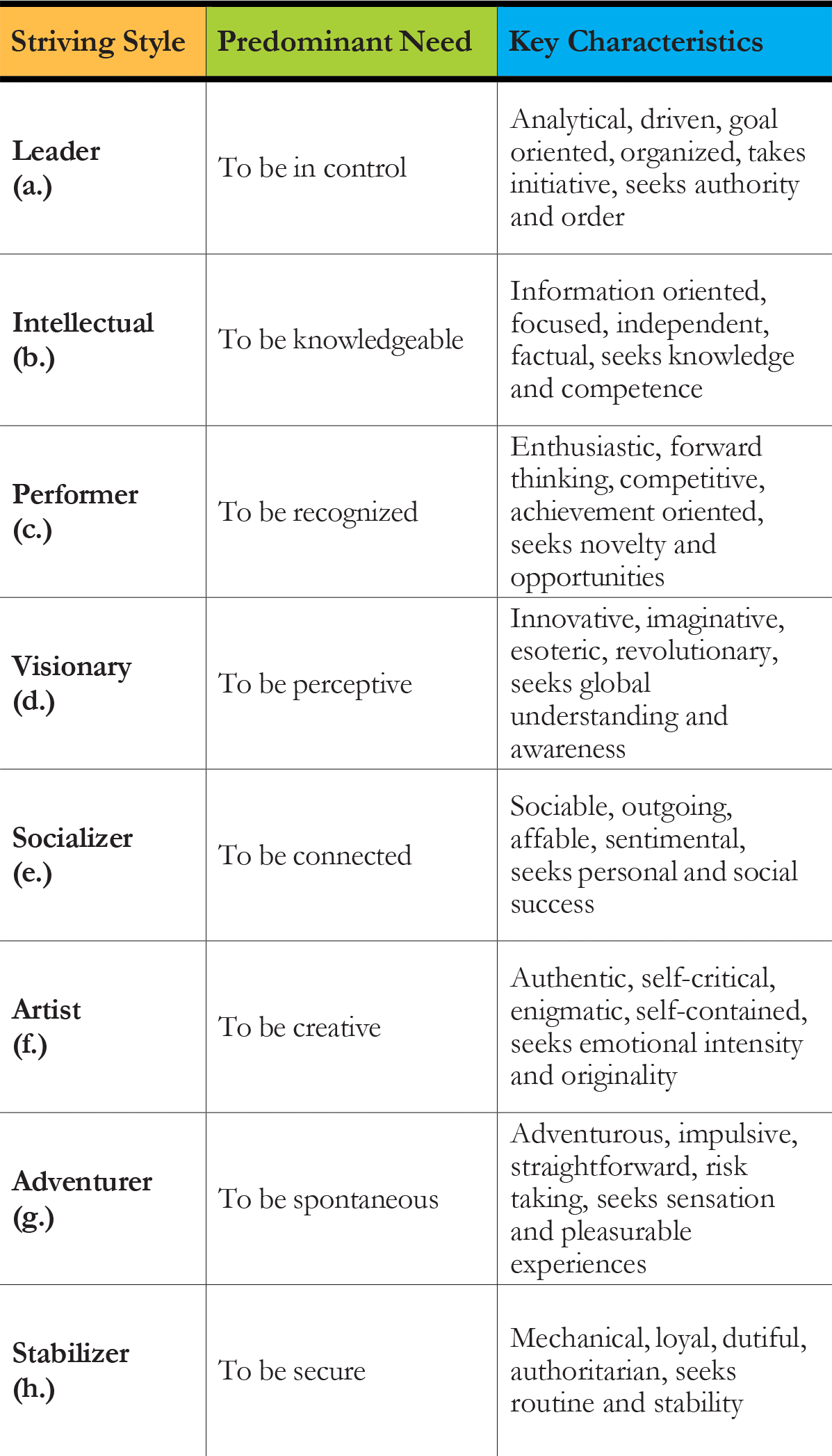
Eight Striving Styles®
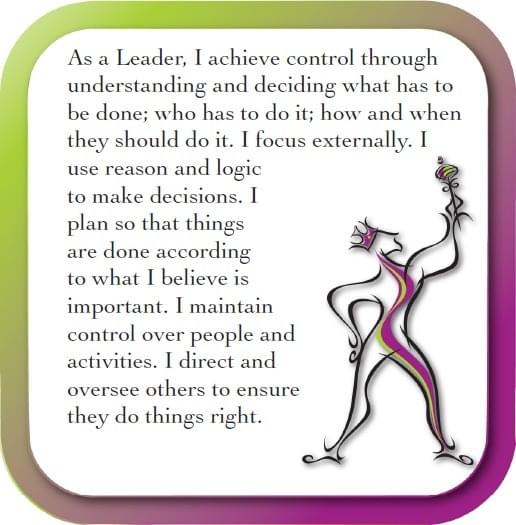
Leader (a.)

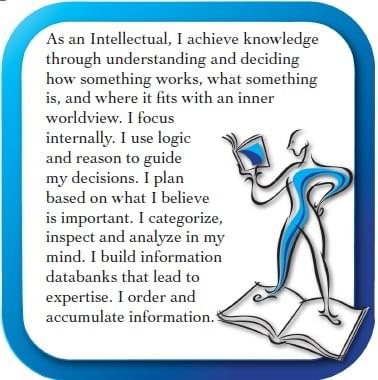
Intellectual (b.)

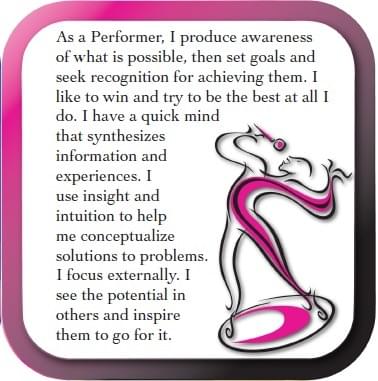
Performer (c.)

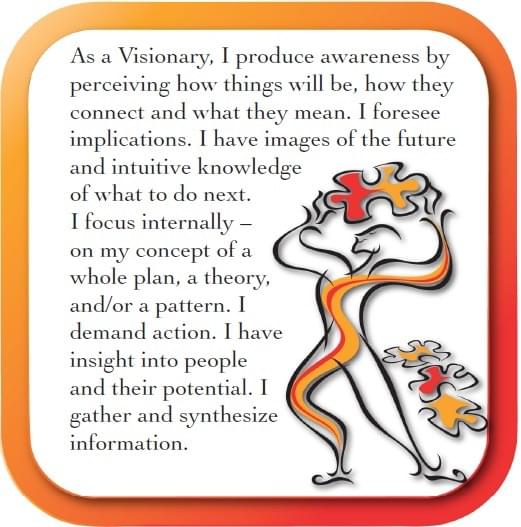
Visionary (d.)

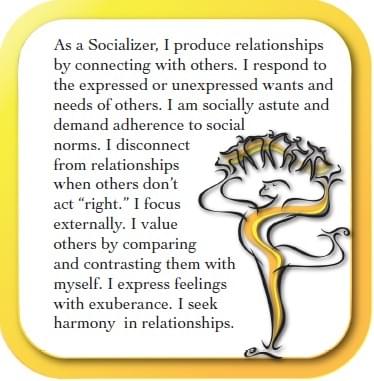
Socializer (e.)

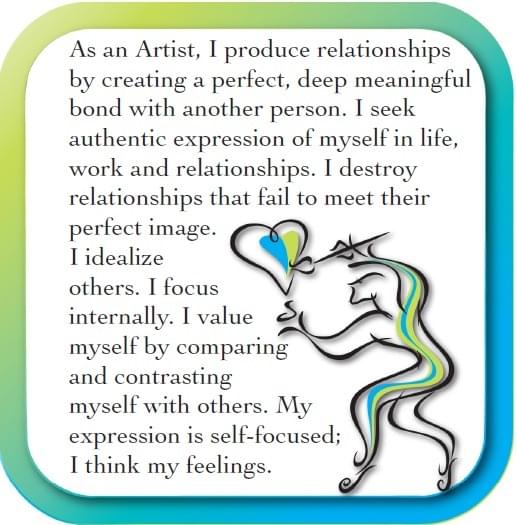
Artist (f.)

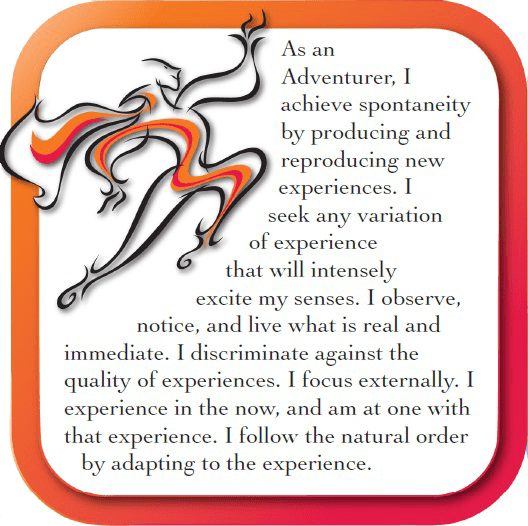
Adventurer (g.)

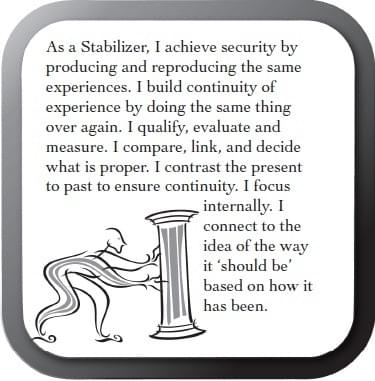
Stabilizer (h.)

Predominant Need & Key Characteristics
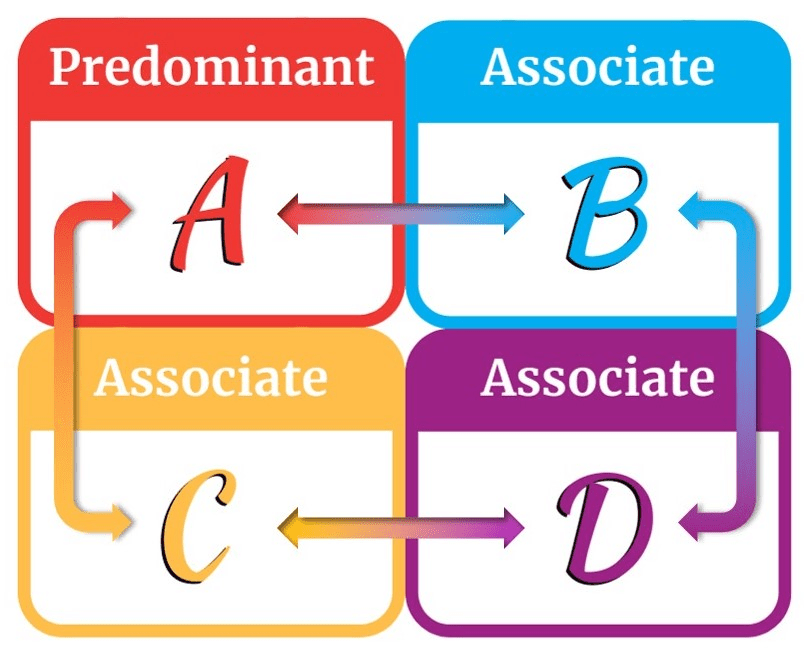
Predominant and Associate Styles
Chapter Three
Four Quadrants of the Brain

Leader
Most Efficient
Leading and managing
Managing emotions and impulses
Understanding and deciding
Direct communication
Being objective and purposeful
Ordering, planning, and organizing
Setting objectives and goals
Being objective and purposeful
Being self-assured and confident
Establishing authority and responsibility
Least Efficient
Meeting emotional needs of others
Recognizing and trusting emotions
Asking for help
Empathizing
Being original and authentic
Letting things happen
Creating for pleasure
Creating harmony
Bonding with others
Cooperating and trusting others
Intellectual
Most Efficient
Researching, investigating, compiling data
Focusing attention on ideas, interests
Critiquing and analyzing
Ordering and accumulating information
Acting on own authority
Independent thinking and decision making
Measuring, qualifying, or quantifying
Applying logic and reason
Managing impulses, emotions
Problem solving
Least Efficient
Developing / maintaining relationships
Making small tal
Recognizing emotions, empathizing
Adhering to social rules
Doing what is expected of them
Collaborative decision making Socializing
Reflecting on others’ motivations
Dealing with emotions or conflict
Creating harmony
Performer
Most Efficient
Inventing and reinventing themselves
Playing to win
Envisioning a desired future state
Inspiring or impressing others
Having an optimistic outlook
Achieving results
Getting recognition
Speaking in front of an audience
Inspiring others to achieve their potential
Seeing the big picture
Least Efficient
Doing things in a prescribed order
Playing by the rules
Following traditions
Being one of the crowd
Meeting emotional needs of others
Having a disciplined approach to self-care
Taking constructive feedback
Doing solitary activities
Enforcing rules and giving boundaries
Maintaining the status quo
Visionary
Most Efficient
Foresight, anticipating what might b
Creating a positive self-image Using intuition
Playing with possibilities
Perceiving the big picture
Attuning to others
Reflecting
Imagining and brainstorming
Making connections and systems
Helping others see their potential
Least Efficient
Living in the present moment
Respecting authority
Staying connected to physical experience
Conforming to rules
Sequencing and planning
Focusing on facts and details
Being guided by experience
Making things real
Making small talk
Having a disciplined approach to self-care
Socializer
Most Efficient
Developing relationships
Conforming to social norms
Helping and supporting others
Networking and socializing
Achieving social status
Assigning value to people, things, activities
Collaborative decision making
Subjective, interpersonal reasoning
Creating harmony
Doing cooperative activities
Least Efficient
Doing solitary activities
Technical or mechanical problem solving
Establishing own authority
Accepting help
Focusing attention or self-reflecting
Tolerating conflict
Applying logic or reason
Independent thinking
Using facts to support decisions
Asserting opinions and ideas
Artist
Most Efficient
Seeking to create perfection
Holistic, authentic living
Assigning value
Doing solitary activities
Alignment with personal values
Attuning empathetically
Creating emotional experiences
Authentic self-expression
Subjective decision-making
Meaningful bonding experiences with others
Least Efficient
Scheduling and organizing
Creating structure and limits
Practical or logical analysis
Maintaining confidence
Supporting decisions with facts
Following rules
Directing and organizing others
Communicating directly and assertively
Impersonal decision making
Setting goals, planning
Adventurer
Most Efficient
Having active, physical experiences
Thinking on their feet
Promoting, selling
Living in the present moment
Negotiating
Handling crisis, troubleshooting, and firefighting
Making activities fun
Storytelling and entertaining
Playing games, sports
Least Efficient
Theorizing and conceptualizing
Seeing the big picture
Reflecting on the meaning of things
Envisioning the future
Perceiving the emotional needs of others
Believing in what can’t be experienced
Exploring psychology
Doing solitary activities
Honoring personal commitments
Stabilizer
Most Efficient
Planning
Sequencing and ordering activities
Following rules, authority
Doing solitary activities
Maintaining traditions
Saving for the future
Disciplined approach, practice and routine
Taking care of physical needs
Enforcing rules
Respectful compliance
Least Efficient
Acknowledging their emotions
Guessing or estimating
Envisioning a desired future state
Speculating on motivations of others
Being adaptable, flexible
Maintaining optimism
Empathizing with others
Emotional self-expression
Making activities fun
Inspiring, persuading others
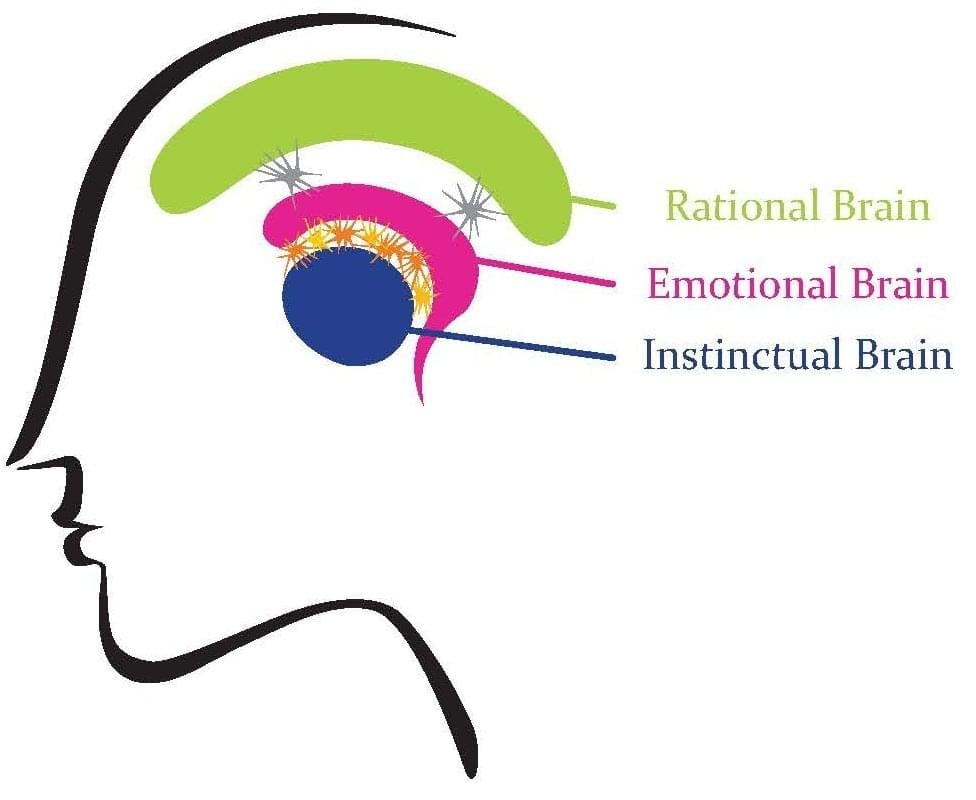
Self-Protective® (SP System) of the Brain
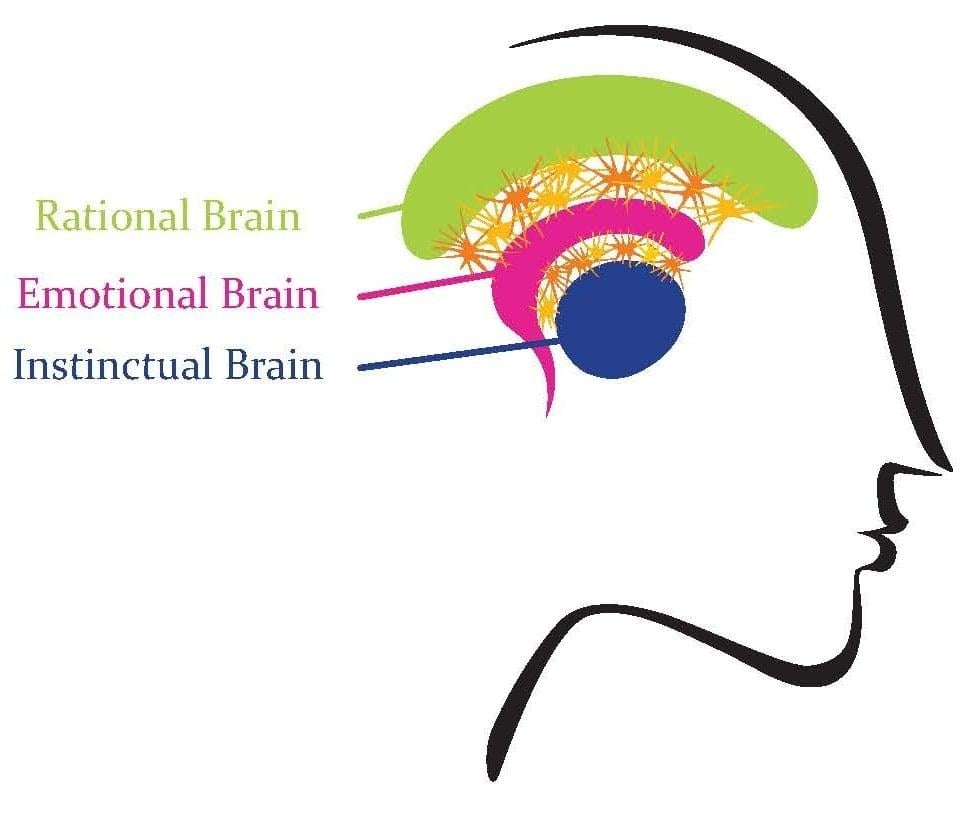
Self-Actualizing® (SA System) of the Brain
Chapter Five
Brief Descriptions of the Eight Striving Styles®
Chapter Fourteen
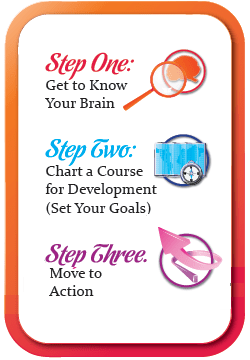
How to Become Your Best Self
Chapter Fifteen
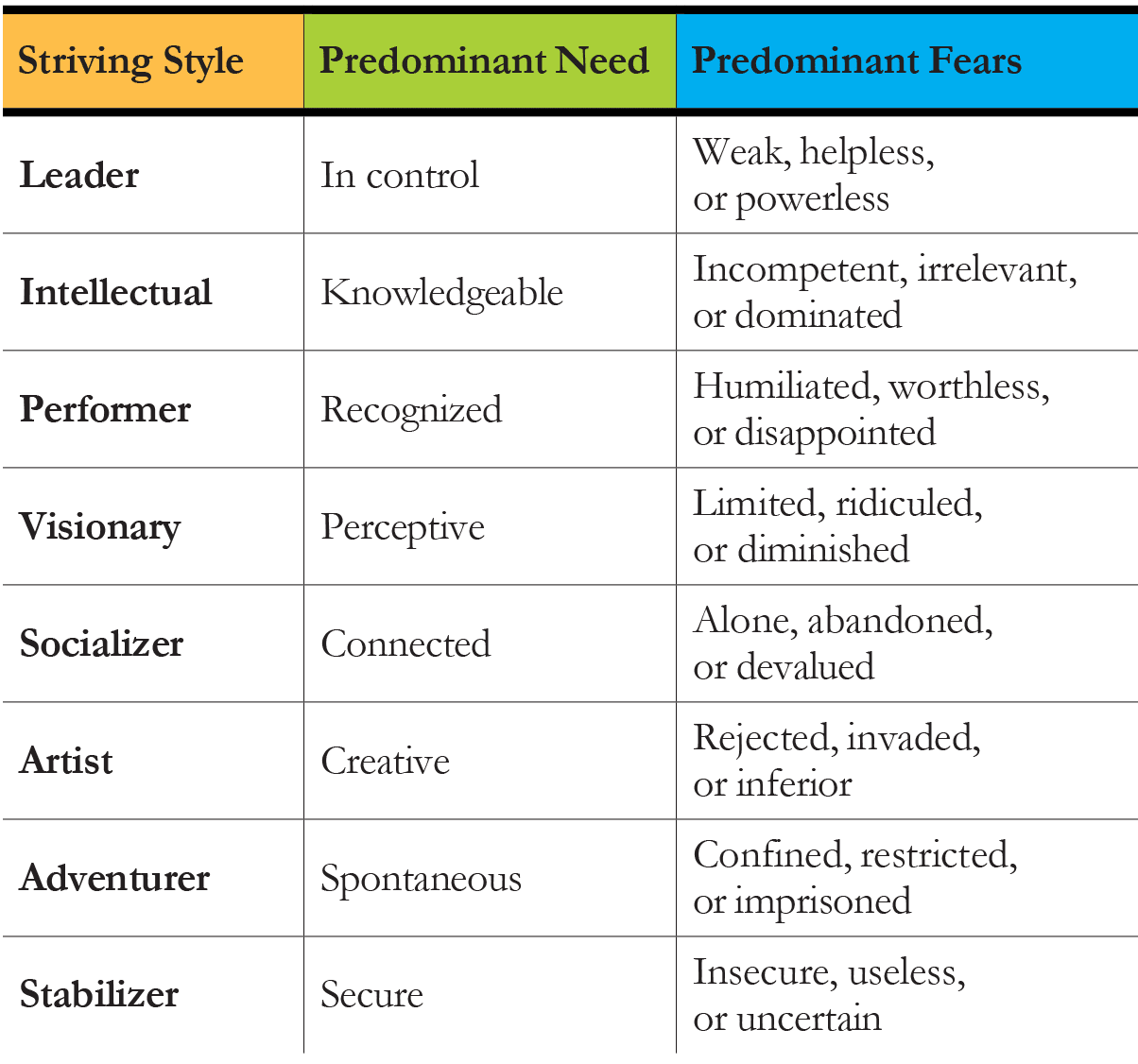
Predominant Need & Fears
© 2024 Sage, Kahuna Enterprises - All Rights Reserved. 4-1972 Sturgeon Road, Dunsford, ON K0M 1L0 CA